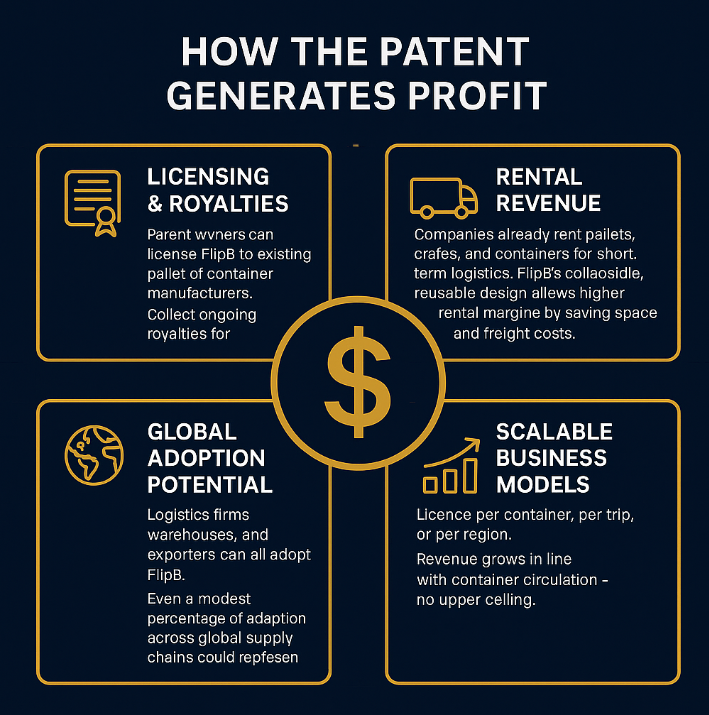
How the Patent Generates Profit
Licensing & Royalties
Patent owners can license Flip5 to existing pallet or container manufacturers.
Collect ongoing royalties for every unit manufactured or sold worldwide.
Rental Revenue
Companies already rent pallets, crates, and containers for short-term logistics.
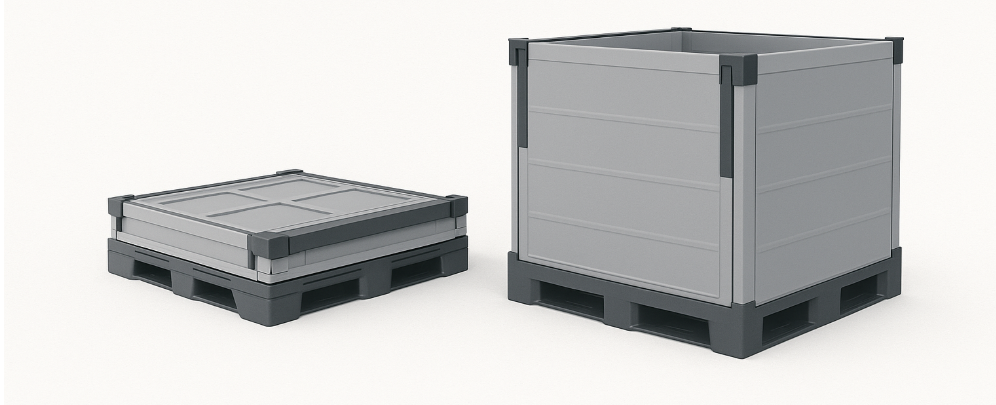
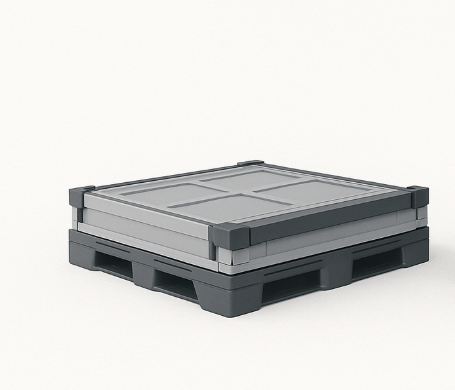
Flip5’s collapsible, reusable design allows higher rental margins by saving space and freight costs.
Global Adoption Potential
Logistics firms, warehouses, and exporters can all adopt Flip5.
Even a modest percentage of adoption across global supply chains could represent multi-million-dollar recurring income.
Scalable Business Models
Licence per container, per trip, or per region.
Revenue grows in line with container circulation — no upper ceiling.
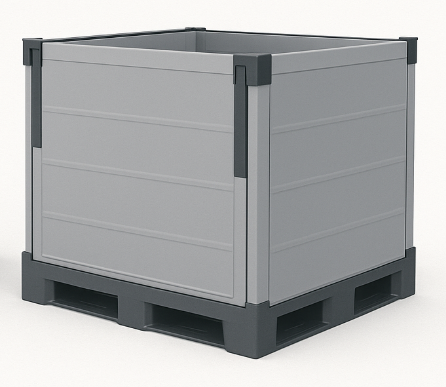
- Space-saving
- Cost-efficient
- Sustainable
Global logistics & freight: The containerised shipping industry moves over 200 million TEUs annually — even a small innovation can capture a share of a trillion-dollar market.
Reusable packaging growth: Demand for returnable and collapsible packaging solutions is projected to grow at 7–9% CAGR, driven by sustainability regulations and cost savings.
Warehousing & distribution: The rise of e-commerce and just-in-time delivery creates constant need for smarter, space-saving transport bins.
Agriculture & food export: Billions of dollars of fresh produce, meat, and seafood exports require durable, reusable bulk transport options.
Circular economy drivers: Global push for reducing single-use wood and cardboard packaging makes Flip5’s collapsible, reusable design especially attractive.
Logistics savings: Companies can cut return freight costs by up to 80% when empty containers collapse to pallet size.
There are two main streams:
Licensing or royalties from manufacturers who produce Flip5 units.
Rental or leasing revenue from logistics providers and exporters who use the bins.